How to Stop Mail for a Deceased Person: USPS (2026)
Learn how to stop mail for deceased person, set up USPS forwarding after death, cut junk mail, and lower identity theft risk.
September 4, 2026
By Stephen Walter, Attorney and CEO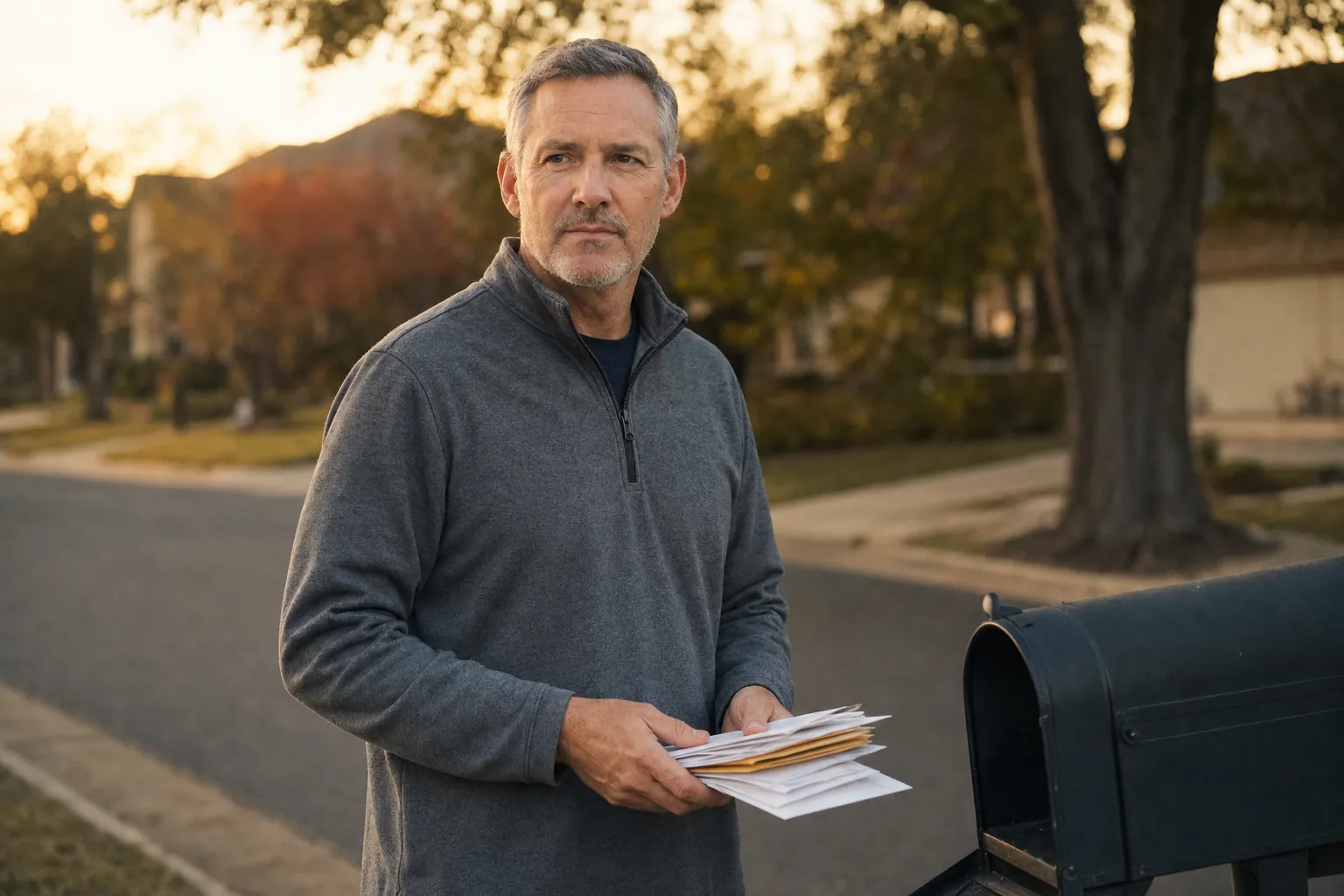
To stop mail for a deceased person, the executor should first arrange USPS forwarding, then notify banks, insurers, agencies, and other senders directly. USPS forwarding after death can help you collect bills, statements, and estate notices, but it does not cancel every piece of mail or stop junk mail by itself.
If you typed "how to stop mail for deceased person," you are probably trying to do two things at once: protect the mailbox and find the accounts the estate still needs to handle. This guide walks through the practical steps, what proof you may need, and how to reduce unwanted marketing mail through the deceased do not contact list.
Why the mail matters after a death
Mail is one of the fastest ways an executor can learn what the deceased person owned and owed. Even if most accounts were online, paper notices may still arrive for:
- Bank and brokerage accounts
- Credit cards and loans
- Life insurance policies
- Pension or retirement plan notices
- Medical bills and health insurance statements
- Property tax bills and utility accounts
- Subscription renewals
- Collection letters
- Court, probate, or government notices
Do not throw mail away just because it looks like a routine statement. A single envelope may reveal an account, a debt, a refund, or a beneficiary claim.
Uncollected mail also creates a fraud risk. An unattended mailbox can expose Social Security numbers, account numbers, medical information, checks, and preapproved credit offers. If you are concerned about financial misuse after a death, Sunset's guide to 3 accounts to freeze first after a death is a good next step.
Step 1: Secure the mailbox
If the home is vacant, make the mailbox part of your first-week checklist.
Start by collecting mail regularly or asking a trusted person nearby to do it until forwarding is active. If you cannot pick up mail right away, ask the local Post Office whether a temporary hold is available for that address.
Also check for:
- Mail left inside the home
- A locked mailbox key
- Packages on the porch
- A mail slot where envelopes may pile up inside
- Old statements filed near a desk or kitchen counter
If the deceased person lived in an apartment, senior community, or assisted living facility, tell the property manager or front desk who is authorized to pick up mail. Ask them not to hand mail to relatives, neighbors, or visitors unless you approve it.
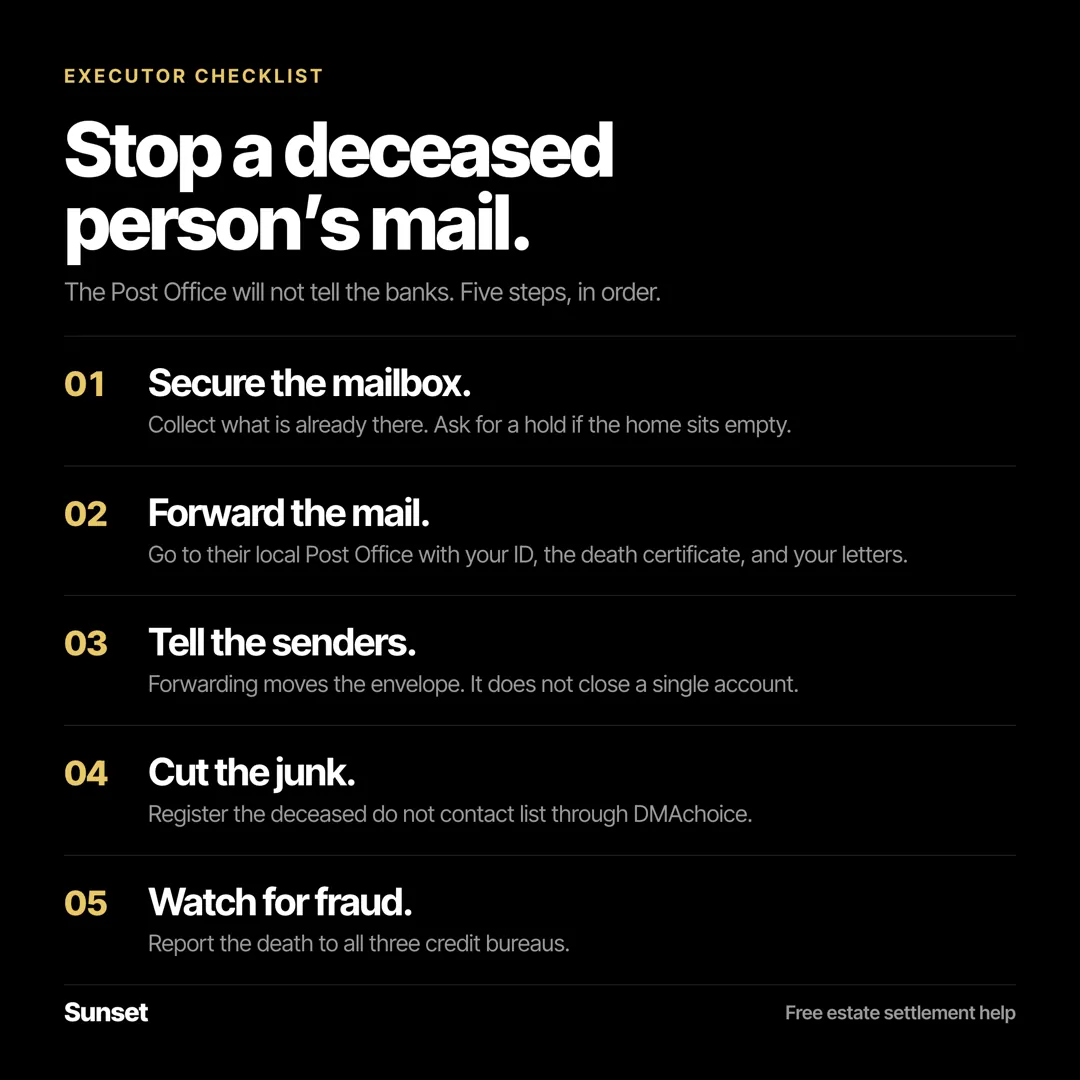
Step 2: Set up USPS forwarding after death
USPS does not automatically know that a person has died. The executor, administrator, or another authorized person usually needs to request forwarding.
In many cases, you should contact the deceased person's local Post Office and ask what they require for a deceased person's mail. Requirements can vary by location and situation, but be prepared to show:
- Your government-issued photo ID
- A certified copy of the death certificate
- Letters testamentary, letters of administration, or other proof that you have authority to act for the estate
- The old address and the forwarding address
- Your contact information
You may be able to submit a change-of-address request, but if you are acting for someone who has died, visiting the Post Office can prevent delays. Bring copies if possible, and ask the postal clerk how long forwarding will last for each mail class.
USPS forwarding is limited. First-Class Mail may forward for a period of time, while marketing mail may not forward unless the sender paid for that service. Periodicals may forward for a shorter window. Packages can have different rules. Treat forwarding as a bridge, not a permanent fix.
The goal is to redirect estate-related mail long enough to identify senders and contact them one by one.
Step 3: Notify the senders that matter
Forwarding moves mail. It does not close accounts, stop bills, or update the estate's records with each company. After mail begins arriving at the forwarding address, sort it by sender.
Focus first on financial and legal mail:
- Banks and credit unions
- Brokerage firms and retirement plan custodians
- Credit card companies and lenders
- Mortgage servicers and property tax offices
- Insurance companies
- Utilities and phone providers
- The IRS and state tax agencies, if needed
- Pension administrators and former employers
- Medical providers and health insurers
When you contact each sender, ask what they need to mark the account holder as deceased. Many will ask for a death certificate. Some will ask for proof that you are the executor or administrator. If there is a named beneficiary, the company may work directly with that beneficiary for that asset.
Keep notes. Record the date, the company, the person you spoke with, the documents requested, and the next step. This record can help later with estate accounting, creditor notices, and questions from heirs. For a broader tracking system, see Sunset's guide to estate accounting.
Step 4: Use the deceased do not contact list to cut junk mail
USPS forwarding will not stop most junk mail. To reduce marketing mail addressed to the deceased person, register them with the deceased do not contact list through the Association of National Advertisers, often reached through DMAchoice.
This service tells many marketers to remove the deceased person from mailing lists. It can reduce catalogs, credit offers, donation requests, and promotional mail over time.
A few points to expect:
- It will not stop all mail.
- It can take weeks or months for mailing lists to update.
- It does not replace contacting banks, insurers, government agencies, or creditors.
- It may not affect local businesses that do not check the list.
You can also contact repeat senders directly. For catalogs, donation mail, and magazine offers, look for a customer service number or mailing preference page. Ask them to mark the person as deceased and remove the address from future campaigns.
Step 5: Watch for identity theft and account misuse
Identity theft after death is more common than many families realize. Fraudsters may use mail, public records, or stolen documents to open accounts, redirect benefits, or take over existing accounts.
Warning signs include:
- Credit card offers still arriving in large numbers
- Collection letters for accounts you do not recognize
- Bank statements showing activity after death
- Checks missing from the mailbox
- Tax notices that do not match what you filed
- Medical bills for care after the date of death
Report the death to the major credit bureaus so they can add a deceased indicator to the credit file. Sunset has a free guide on how to report a death to the credit bureaus, including what documents are often needed.
If you suspect fraud, contact the financial institution, file a report with the Federal Trade Commission at IdentityTheft.gov, and consider a police report if a bank or creditor asks for one. This article is informational and is not legal advice, so speak with an attorney if there is a dispute, theft claim, or contested estate issue.
What not to do with a deceased person's mail
A few common shortcuts can create problems for an executor.
Do not rely on "return to sender" for everything. That may work for mail sent in error, but it can also cut off information you need to settle the estate.
Do not leave mail piling up at a vacant home. It signals that the property may be empty and can expose account information.
Do not open mail if you have no authority and are not helping the authorized representative. If you are unsure who is allowed to handle the mail, ask the executor, administrator, or probate court.
Do not cancel every account as soon as mail arrives. Some accounts may need to stay open long enough to collect refunds, pay valid estate expenses, maintain insurance, or transfer assets.
Do not ignore mail addressed to "The Estate of." Those letters may relate to taxes, creditor claims, probate, or estate administration.
Executor checklist for mail after death
Use this checklist to keep the task under control:
- Secure the mailbox and collect existing mail.
- Ask USPS about a hold if the home is vacant and forwarding is not ready.
- Set up USPS forwarding after death with proof of authority.
- Save financial, tax, insurance, and government mail.
- Make a list of senders and account numbers, using only the last four digits when sharing notes.
- Notify banks, insurers, lenders, agencies, and service providers of the death.
- Register with the deceased do not contact list to reduce marketing mail.
- Report the death to credit bureaus.
- Watch for fraud, unfamiliar debts, and post-death account activity.
- Keep a mail log for the estate records.
This fits into a larger assets-and-liabilities-first approach: identify what exists, protect it, find what is owed, then work through transfers and payments in the right order.
How Sunset can help with the estate work behind the mail
Mail is often the first clue, but it is rarely the whole picture. A person may have old bank accounts, forgotten retirement funds, life insurance, online financial accounts, or debts that never send paper statements.
Sunset helps families with estate settlement by searching 2,500+ financial institutions to find accounts and assets. Sunset can also generate state and county probate packets, help set up an FDIC-insured estate account through its bank partnership, and support transfers to beneficiaries and heirs.
Sunset has helped 15,000+ families settle estates. Any Sunset fee counts as an estate administration expense the executor can reimburse from the estate, and all assets go to the beneficiaries and heirs. When legal counsel is needed, Sunset can refer families to a local probate attorney.
FAQ
Can I forward mail for someone who died?
Yes, if you are the executor, administrator, or another person with authority to act for the estate. Contact the deceased person's local Post Office and ask what proof they require. You may need your ID, a death certificate, and court papers showing your authority.
How do I stop junk mail for a deceased person?
Register the person with the deceased do not contact list through DMAchoice, then contact repeat senders directly. This can reduce marketing mail, but it will not stop all mail and does not replace notifying financial institutions, agencies, and creditors.
Does USPS notify companies when someone dies?
No. USPS can help forward or hold mail in some situations, but it does not notify banks, insurers, credit card companies, or government agencies that a person has died. The executor usually needs to contact each sender.
How long should I keep a deceased person's mail?
Keep mail that relates to assets, debts, taxes, insurance, property, medical bills, and probate until the estate is settled and any required record period has passed. Ask a tax professional or attorney about records tied to tax filings, disputes, or court matters.
What if mail keeps coming after I notified everyone?
Some systems take time to update, and marketing lists can be old. Keep a simple log, contact repeat senders again, and confirm they marked the account holder as deceased. For financial mail, ask whether more documents are needed.
Get help finding accounts and protecting the estate
Stopping and forwarding mail is a practical first step, but the bigger job is finding every asset, identifying valid debts, and protecting the estate from fraud. Sunset can help you turn scattered mail, statements, and unknown accounts into an organized estate plan of action.
If you are serving as executor and are unsure what accounts exist, Sunset can help search for assets, prepare probate paperwork, set up an estate account, and support beneficiary transfers. Start with the mail, then let Sunset help with the next steps.