How Much Does Probate Cost? The Fees Nobody Warns You About (2026)
Probate costs more than the attorney's bill. See the full breakdown of court filing fees, executor bonds, appraisals, publication, and certified copies.
June 23, 2026
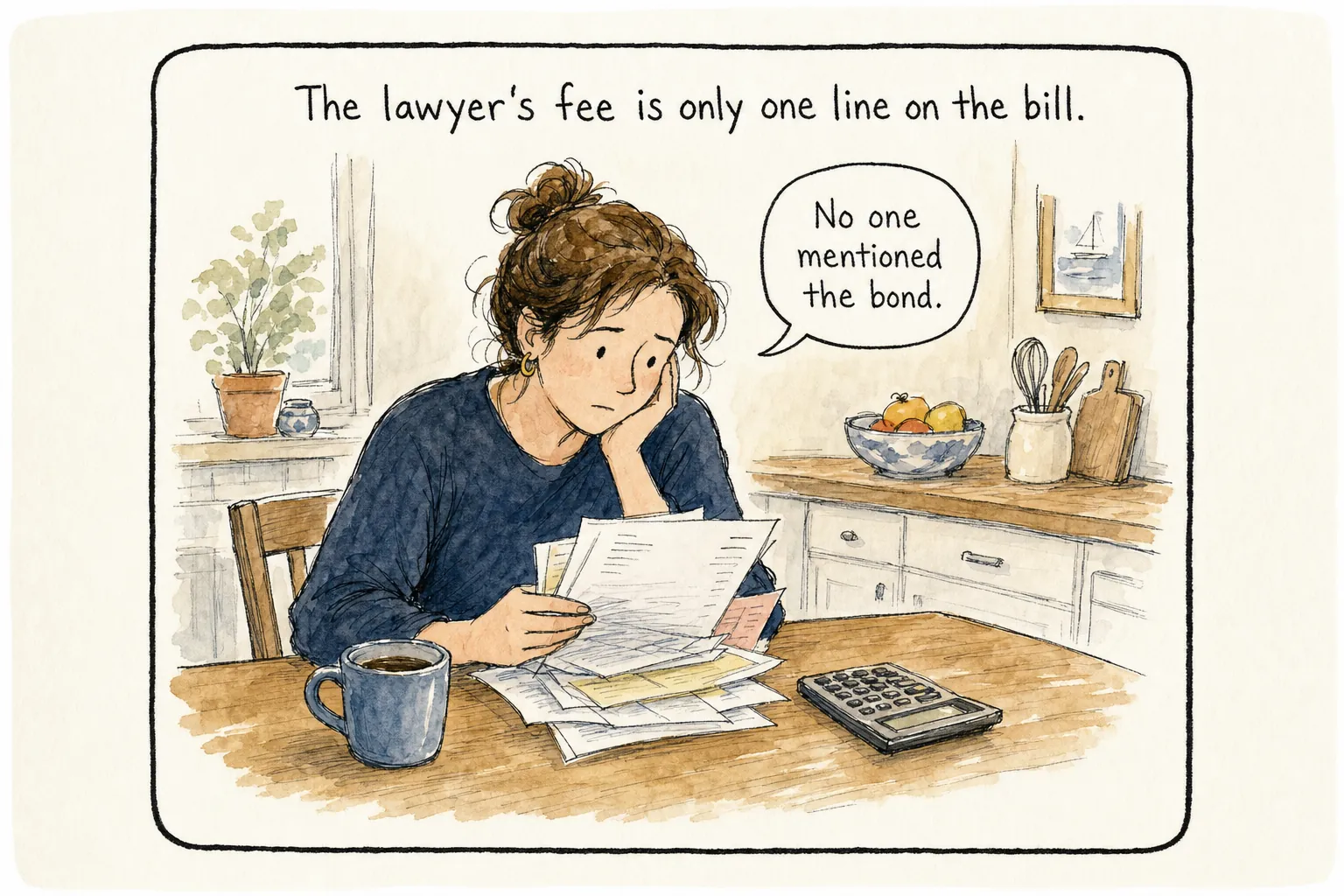
When people ask how much probate costs, they usually get one number back: the attorney's fee. But the lawyer is only one line on the bill. Probate also carries court filing fees, an executor bond, property appraisals, newspaper publication, certified copies, and accounting work, and those add up to anywhere from a few hundred dollars to several percent of the entire estate. For a typical estate, the total often lands between 3% and 7% of the estate's value once every cost is counted.
If you're planning ahead, or you've just been named executor and want to know what you're walking into, here's where the money actually goes.
The attorney fee is only part of the picture
We cover lawyer fees in detail in our probate attorney fees guide, so this post focuses on everything else, the costs that catch families off guard because no one itemizes them up front.
Think of probate cost as five buckets:
- Court and filing fees paid to the county
- The executor bond (a kind of insurance premium)
- Valuation costs (appraisers, real estate agents, business valuators)
- Notice and publication fees
- Administrative costs (certified copies, postage, accounting, recording fees)
Each bucket is small on its own. Together they're the part of the bill that surprises people.
Court and filing fees
The first check you write goes to the probate court. Filing the petition to open the estate is the main fee, and it varies widely by state and county, usually somewhere between $50 and $500. California, for example, charges a $435 filing fee to open a probate case. Some states scale the fee to the size of the estate, so a larger estate pays more just to get in the door.
After that, expect smaller charges along the way:
- Filing the will or petition: $50 to $500
- Issuing letters testamentary or letters of administration: $5 to $50 per certified copy, and banks and brokerages each want their own
- Filing the inventory and the final accounting: often a separate fee
- Recording a deed when real estate transfers: $15 to $250 depending on the county
None of these is large, but they recur at every step, and you pay them whether the estate is simple or complicated.
The executor bond: the cost most people miss
This is the one that surprises families most. A probate bond (also called a fiduciary or executor bond) is a financial guarantee that protects the heirs and creditors if the executor mismanages or steals from the estate. Many courts require one before they'll let an executor act, especially when the will doesn't waive it or when there's no will at all.
A bond is not a one-time filing fee. It's an insurance premium, priced as a percentage of the estate's value, and it's typically paid every year the estate stays open. Premiums usually run about 0.5% to 0.8% of the bond amount annually. On a $500,000 estate, that's roughly $2,500 to $4,000 per year, and a contested or slow-moving estate can stay open for two or three years.
Two things lower or remove this cost:
- A will that explicitly waives the bond requirement. This is one of the simplest, highest-value things a person can do when writing a will.
- A state's small estate process, which usually skips the bond entirely.
If you're the pre-planner reading this, waiving the bond in your will is close to free and can save your family thousands.
Appraisal and valuation costs
The court needs to know what the estate is worth, and "what the deceased thought the house was worth" doesn't count. Depending on what's in the estate, you may need to pay professionals to value it:
- Real estate appraisal: $300 to $600 for a standard home, more for unusual or high-value property
- Business valuation: $3,000 and up if the deceased owned a company or a partnership interest
- Personal property appraisal: a few hundred dollars for jewelry, art, collectibles, or vehicles
- Some states appoint a "probate referee" who values assets and takes a fee tied to the estate's value, often around 0.1%
Cash, bank accounts, and publicly traded stock don't need an appraiser, their value is the statement balance. The cost shows up when the estate holds property without a clear market price.
Notice and publication fees
Most states require the executor to publish a notice to creditors in a local newspaper, telling unknown creditors the estate is open and giving them a window to file claims. This protects the estate from surprise debts later, but it costs money: usually $50 to $250 depending on the paper and how many times the notice has to run.
You may also pay for certified mail to send formal notice to known heirs and creditors, which is small but adds up across a long list of recipients.
The administrative costs that quietly stack up
These are the easy-to-forget line items:
- Certified copies of the death certificate and court orders. Every institution wants its own original. Families routinely need 10 or more death certificates, at roughly $10 to $25 each. Our guide on how to order death certificates walks through how many you'll actually need.
- Accounting and tax prep. The estate may need a final income tax return, and a complicated estate may need a CPA to prepare the court accounting. Figure several hundred to a few thousand dollars.
- Postage, recording, and miscellaneous filing fees throughout the case.
Individually minor. Across a full probate, they're real money.
What probate costs by estate size
To put the buckets together, here's a rough picture for an uncontested estate with one home and a handful of accounts:
| Estate value | Likely total non-attorney cost |
|---|---|
| Under $50,000 (small estate process) | $200 to $1,500 |
| $250,000 | $2,000 to $6,000 |
| $500,000 | $4,000 to $12,000 |
| $1,000,000+ | $8,000 to $25,000+ |
Add the attorney fee on top, and you can see why total probate cost commonly reaches 3% to 7% of the estate. The single biggest lever is whether you can avoid formal probate at all.
How to keep probate cost down
A few things genuinely move the number:
- Use the small estate process if you qualify. Many states let estates under a dollar limit skip formal probate with a small estate affidavit, which avoids the bond, the long timeline, and most court fees.
- Waive the bond in the will. Costs the planner nothing, saves the estate thousands.
- Keep clean records. Good asset and account records cut the accounting bill and shorten the timeline, and a faster case is a cheaper case. See how long probate takes.
- Use beneficiary designations and transfer-on-death tools where they fit, so fewer assets pass through probate in the first place.
How Sunset helps
Probate is expensive partly because it's slow and disorganized, and disorganization costs money in bond premiums, accounting fees, and billable hours. Sunset takes that off the family's plate. We help you find every account and asset the deceased left behind, build the probate paperwork your county actually requires, and open an FDIC-insured estate account to hold and move the money cleanly. We track liabilities alongside assets, so you see the real picture before you spend a dollar, and we produce court-ready records that cut the accounting work at the end.
Sunset has helped more than 15,000 families settle an estate, and it's free for families. We don't make probate free, but we make it faster and far less of a guessing game, and a faster estate is a cheaper one.
Frequently asked questions
How much does probate cost on average?
Total probate cost commonly runs 3% to 7% of the estate's value once you count court fees, the executor bond, appraisals, publication, certified copies, and attorney fees. A simple, uncontested estate sits at the low end; a contested or complex one runs higher.
What is an executor bond and do I have to pay for it?
An executor or probate bond is insurance that protects heirs and creditors if the executor mismanages the estate. Courts often require it unless the will waives it. The premium is roughly 0.5% to 0.8% of the bond amount per year, so it can cost thousands on a larger estate that stays open more than a year.
Are probate fees paid out of the estate or by the executor personally?
Probate costs are paid from the estate's assets, not the executor's own pocket. The executor advances some costs and is reimbursed from the estate, so heirs receive what's left after these expenses.
Can I avoid probate costs entirely?
Sometimes. Small estates under your state's dollar limit can often use a small estate affidavit and skip most costs. Assets with named beneficiaries, joint owners, or transfer-on-death designations pass outside probate too. What remains in the deceased's sole name usually has to go through the process.
Does a smaller estate always cost less?
Usually, but not always. A small estate with a contested will or messy records can cost more than a large, well-organized one. The timeline and the level of conflict drive cost as much as the dollar value does.
Settling an estate is hard enough without surprise fees. If you want help finding the assets, building the paperwork, and keeping the money organized from day one, Sunset is here, and it's free for families.