What Is a Transfer on Death Deed and How Does It Work? (2026)
Learn what a transfer on death deed is and how it works in 2026. Get the facts on TOD deeds, state requirements, recording rules, and common problems.
May 21, 2026

You keep seeing transfer on death deed forms online and wondering if signing one will keep your house out of probate. It can, but only if your state allows it, you record it while you're alive, and your beneficiary survives you. A lot of people skip the recording step and assume the signed document sitting in a file cabinet will work. It won't. Here's what you need to know about where TOD deeds are legal, how to execute them correctly, and the limitations that no one mentions until it's too late.
TLDR:
- A transfer on death deed lets you name beneficiaries who inherit real estate automatically when you die, skipping probate entirely.
- Only 30 states allow TOD deeds; Pennsylvania, Georgia, and others require alternatives like living trusts or life estate deeds.
- You must record the deed while alive with your county recorder or it has no legal effect.
- TOD deeds don't protect property from creditors, Medicaid recovery, or issues if your beneficiary dies before you do.
- Sunset searches all accounts, debts, and assets across all 50 states after death, handling everything beyond the real estate transfer.
What is a transfer on death deed
A transfer on death deed (TODD) is a legal document that lets a property owner name one or more beneficiaries to inherit real estate automatically upon their death, without going through probate. The property transfers directly to the named beneficiary once the owner dies and the deed is recorded.
Unlike a will, a TODD takes effect outside of probate court. The owner retains full control of the property during their lifetime, including the right to sell it, mortgage it, or revoke the deed entirely. The beneficiary has no legal claim to the property until the moment of the owner's death.
TODDs are sometimes called beneficiary deeds, and they are governed by state law, so the rules vary considerably depending on where the property is located. Not every state allows them, which is why understanding your state's specific requirements matters before relying on one as part of an estate plan.
Which States Allow Transfer on Death Deeds
Transfer on death deeds are only available in states that have passed specific authorizing legislation. As of 2026, about 30 states plus the District of Columbia allow them.
States that allow transfer on death deeds
| State | Notes |
|---|---|
| Alaska, Arizona, Arkansas, Colorado, Hawaii, Illinois, Indiana, Kansas, Minnesota, Missouri, Montana, Nebraska, Nevada, New Mexico, North Dakota, Ohio, Oklahoma, Oregon, South Dakota, Utah, Virginia, Washington, West Virginia, Wisconsin, Wyoming | Standard TOD deed states |
| California | Revocable transfer on death deed; requires notarization and two witnesses |
| Texas | Transfer on death deed available; specific statutory form required |
| Florida | Uses "enhanced life estate deed" (Lady Bird deed) instead of a standard TOD deed |
| New York | Enacted TOD deed legislation in 2024 |
States that do not allow TOD deeds include Pennsylvania, Georgia, and others. If you own property in one of those states, alternatives like a living trust or life estate deed may be your only options for avoiding probate on real estate.
How to Create and Record a Transfer on Death Deed
The process follows a clear sequence, and each step is mandatory. Skipping any one can invalidate the deed entirely.
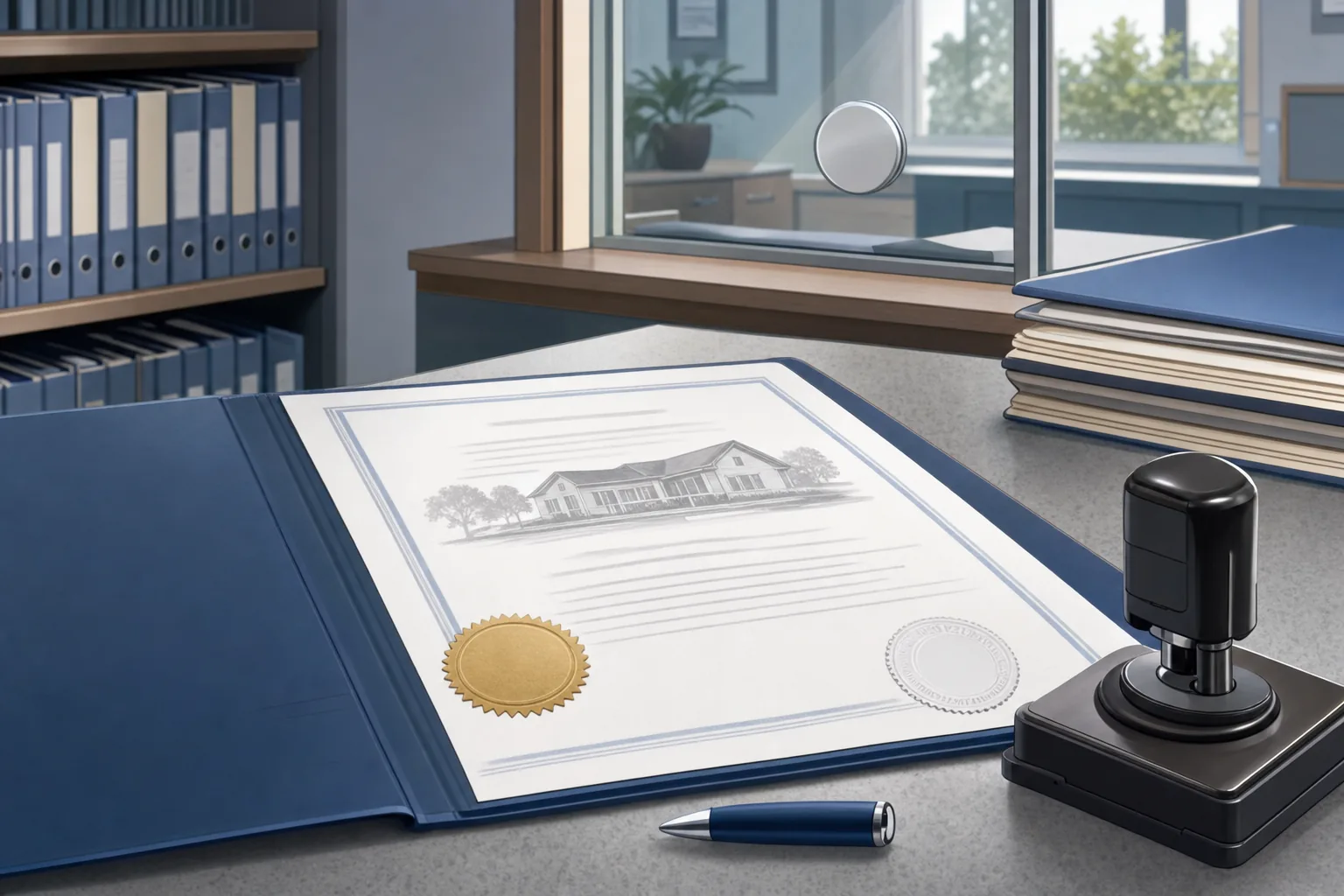
- Get your state's statutory form. Texas, California, and most other TOD deed states prescribe a specific form, often available through the county recorder's office or a licensed estate attorney.
- Identify the property by its full legal description, which is more specific than the street location. This appears on your current deed or in county property records.
- Name the beneficiary using their full legal name. Some states also require a location or other identifying information.
- Sign before a notary public. Every TOD deed state requires notarization. California also requires two adult witnesses in addition to the notary.
- Record the deed with the county recorder or register of deeds while you are still alive. An unrecorded deed has no legal effect.
A signed-but-unfiled deed sitting in a drawer does nothing. If you change your mind later, revoking the deed requires recording a separate revocation document with the same county office.
Common Problems with Transfer on Death Deeds
Transfer on death deeds are genuinely useful, but they come with real limitations worth knowing before you sign anything.
Creditor exposure
A TOD deed passes property outside of probate, but it does not protect the asset from the deceased's debts. In many states, creditors can still make claims against the property after the owner dies.
Beneficiary predeceases the owner
If your named beneficiary dies before you do and you never update the deed, the property may end up going through probate anyway, defeating the original purpose.
Medicaid recovery
Several states allow Medicaid to seek reimbursement from property transferred via TOD deed. This catches many families off guard, particularly in California, Ohio, and Texas.
No protection from incapacity
A TOD deed does nothing while you are alive. If you become incapacitated, it offers no direction for managing the property, unlike a living trust.
Contested transfers
TOD deeds can be challenged on grounds of undue influence, lack of capacity, or improper execution, potentially pulling the property into litigation regardless.
Transfer on Death Deed vs Living Trust
Both tools let you pass real estate to a named beneficiary without probate, but they work quite differently.
A transfer on death deed is simpler and cheaper to set up. You sign and record a single document, and the property transfers automatically when you die. There's no trust to fund, no ongoing administration, and no attorney typically required.
A living trust offers more control. It can hold multiple asset types, appoint a successor trustee to manage assets if you become incapacitated, and handle more complex family situations like minor beneficiaries or blended families.
Here's a quick comparison:
| Factor | Transfer on death deed | Living trust |
|---|---|---|
| Setup cost | Low | Higher |
| Asset types covered | Real property only | Multiple asset types |
| Incapacity planning | No | Yes |
| Probate avoidance | Yes | Yes |
| Complexity | Low | Higher |
In California, some estate planners actually recommend a living trust over a TOD deed for larger or more complex estates, since the deed only covers the single property and offers no incapacity protection.
Tax Implications of Transfer on Death Deeds
Transfer on death deeds carry real tax consequences that vary depending on your state and situation. Here are the key points to understand:

- Beneficiaries receive the property at a stepped-up basis, meaning the cost basis resets to the fair market value on the date of death. This can substantially reduce capital gains taxes if the property has appreciated over the years.
- The transfer itself does not trigger gift tax or estate tax at the time of the owner's death, but the property's value is still included in the gross estate for federal estate tax purposes.
- In California, Proposition 19 limits the parent-child property tax reassessment exclusion, so beneficiaries who inherit through a transfer on death deed may face higher annual property taxes unless they move in and claim it as a primary residence.
- Some states impose an inheritance tax on the beneficiary. Pennsylvania, for example, taxes most beneficiaries even when property passes outside of probate.
Tax rules change, and the interaction between federal estate law and state-level property tax rules is genuinely complicated. Consulting a qualified estate planning attorney or tax advisor before recording a transfer on death deed is worth the time.
How Sunset Simplifies Estate Settlement After a Transfer on Death Deed
A transfer on death deed solves one piece of the puzzle. The rest of the estate still needs attention.
Even when real estate passes cleanly through a TOD deed, families are typically left to locate accounts, assets, and outstanding debts on their own. That process can take weeks of phone calls, paperwork, and guesswork, especially when the deceased kept no organized records.
Sunset handles the search across all of those asset categories in one place. Upload a death certificate, and we search thousands of institutions across all 50 states, returning a complete financial picture within days. For any assets that do require probate, including accounts titled solely in the deceased's name with no beneficiary designation, we generate county-specific court documents.
If the estate needs a central account to receive and distribute funds, we can open an FDIC-insured estate bank account through our banking partner.
A TOD deed transfers the house. Sunset handles everything else.
Final Thoughts on Transfer on Death Deeds
Transfer on death deeds work when your state allows them and you remember to record the document while you're still alive. They pass the property cleanly and keep that one asset out of probate court, which matters. But the rest of an estate still needs attention, and finding scattered financial accounts is where families lose weeks. If you're handling an estate right now, start a free search to locate bank accounts, retirement funds, and life insurance policies across every state. A transfer on death deed solves the real estate piece, and the rest becomes straightforward when you know what you're actually looking for.
FAQ
Transfer on death deed California vs living trust?
A transfer on death deed is simpler and cheaper to set up. You record one document and the property transfers automatically at death. A living trust covers multiple asset types, provides incapacity protection, and handles complex situations like minor beneficiaries, but costs more upfront. For larger or more complex estates in California, estate planners often recommend a living trust since the deed only covers a single property and offers no help if you become incapacitated.
Can a transfer on death deed be contested?
Yes. TOD deeds can be challenged on grounds of undue influence, lack of mental capacity, or improper execution, potentially pulling the property into litigation. While they pass property outside of probate, they don't guarantee the transfer won't be disputed by family members or other interested parties.
What happens if the beneficiary on my transfer on death deed dies before I do?
If your named beneficiary predeceases you and you never update the deed, the property may end up going through probate anyway, which defeats the original purpose of using a TOD deed. You'll need to record a new deed naming a different beneficiary or revoke the existing one.
Problems with transfer on death deeds in California?
California TOD deeds face several issues: Proposition 19 may cause beneficiaries to face higher property taxes unless they move in and claim the home as a primary residence, Medicaid can seek reimbursement from property transferred this way, creditors can still make claims against the property after death, and the deed provides no protection if you become incapacitated. The deed also requires notarization plus two witnesses, which is stricter than most states.
Where can I get a transfer on death deed form for my state?
Most states that allow TOD deeds provide a statutory form through the county recorder's office where the property is located. You can also obtain forms from a licensed estate attorney. Texas, California, and other TOD deed states prescribe specific forms that must be used, and using the wrong version can invalidate the deed entirely.