Can Debts Be Inherited? What Families Need to Know (2026)
Learn if debts can be inherited after death. Find out when families are responsible for estate debt, co-signed loans, and community property rules in 2026.
May 26, 2026
By Stephen Walter, Attorney and CEO
The question can debts be inherited shows up the second someone dies with credit card balances or medical bills. The short answer is no, but the full answer depends on a few key factors. If you co-signed, live in a community property state, or fall under filial responsibility laws, you might owe more than you think. Here's what actually determines who pays.
TLDR:
- You don't inherit debt from parents or spouses; the estate pays creditors before heirs receive anything.
- Joint accounts, co-signed loans, and community property states are exceptions where you may owe.
- Life insurance, retirement accounts, and trust assets with named beneficiaries bypass creditors entirely.
- Sunset searches across 2,500+ institutions to find all assets and debts.
How Debt Is Handled When Someone Dies
When someone dies, their debts belong to the estate, not the family. Before any assets reach heirs, the estate goes through probate and creditors get paid from whatever assets exist. If the estate covers what's owed, it's considered solvent and heirs receive what remains. If it can't, the estate is insolvent, creditors may go unpaid, and heirs generally walk away without personal liability.
You don't inherit debt the way you inherit property. There are real exceptions to this rule, covered in the sections below, but the baseline is clear: the estate pays, not the family.
When You Might Be Responsible for Someone Else's Debt
There are real exceptions where debt liability can transfer to a living person. Understanding them helps you know where you actually stand.
Joint accounts and co-signers
If you co-signed a loan or held a joint credit account with someone who died, you're fully responsible for that balance. This applies to spouses, adult children, or anyone else who signed alongside the original borrower.
Community property states
In states like California, Arizona, and Texas, debts taken on during a marriage are generally considered shared. A surviving spouse may owe them even without co-signing.
Filial responsibility laws
About 30 states have filial responsibility statutes that can, in limited circumstances, require adult children to cover a parent's unpaid medical or long-term care bills.
Debts That Pass With Property
Some debts don't need to be "inherited" in the traditional sense because they travel with property automatically.
Mortgage debt
If you inherit a home, the mortgage comes with it. You can continue making payments, refinance, or sell the property to pay it off. You don't personally owe the balance, but the lender can foreclose if payments stop.
Property tax liens
Unpaid property taxes attach to the land itself. Whoever takes ownership takes on the obligation to resolve them.
Car loans
A vehicle with an outstanding loan works the same way. The asset and its debt arrive together.
Community Property States and Spousal Debt
In the nine community property states (Arizona, California, Idaho, Louisiana, Nevada, New Mexico, Texas, Washington, and Wisconsin), most debts acquired during a marriage are treated as jointly owned, regardless of whose name is on the account.
For surviving spouses, that creates real exposure. If your spouse took out a personal loan during the marriage and never mentioned it, creditors may still be able to pursue you after their death.
The remaining 41 states follow common law rules, where debts belong to whoever incurred them. Without a co-signature or joint account, a surviving spouse has no personal liability. Where you live at the time of death matters as much as what was borrowed.
Filial Responsibility Laws and Medical Debt
Roughly 26 to 28 states carry filial responsibility laws that can require adult children to pay a parent's nursing home or medical bills. Enforcement is rare, but the conditions that trigger it are specific: the parent received care in a filial state, was indigent, didn't qualify for Medicaid, and the facility chose to pursue a child with the financial means to pay.
Most facilities don't go this route. Some do. A Pennsylvania court ordered a son to pay nearly $93,000 for his mother's nursing home care, a case that put elder law attorneys on notice nationally. Which state your parent received care in matters more than most families realize.
Types of Debt and How They Are Handled
Not all debt is treated the same once someone dies. Whether a balance disappears, travels with an asset, or becomes the estate's problem depends largely on what kind it is.
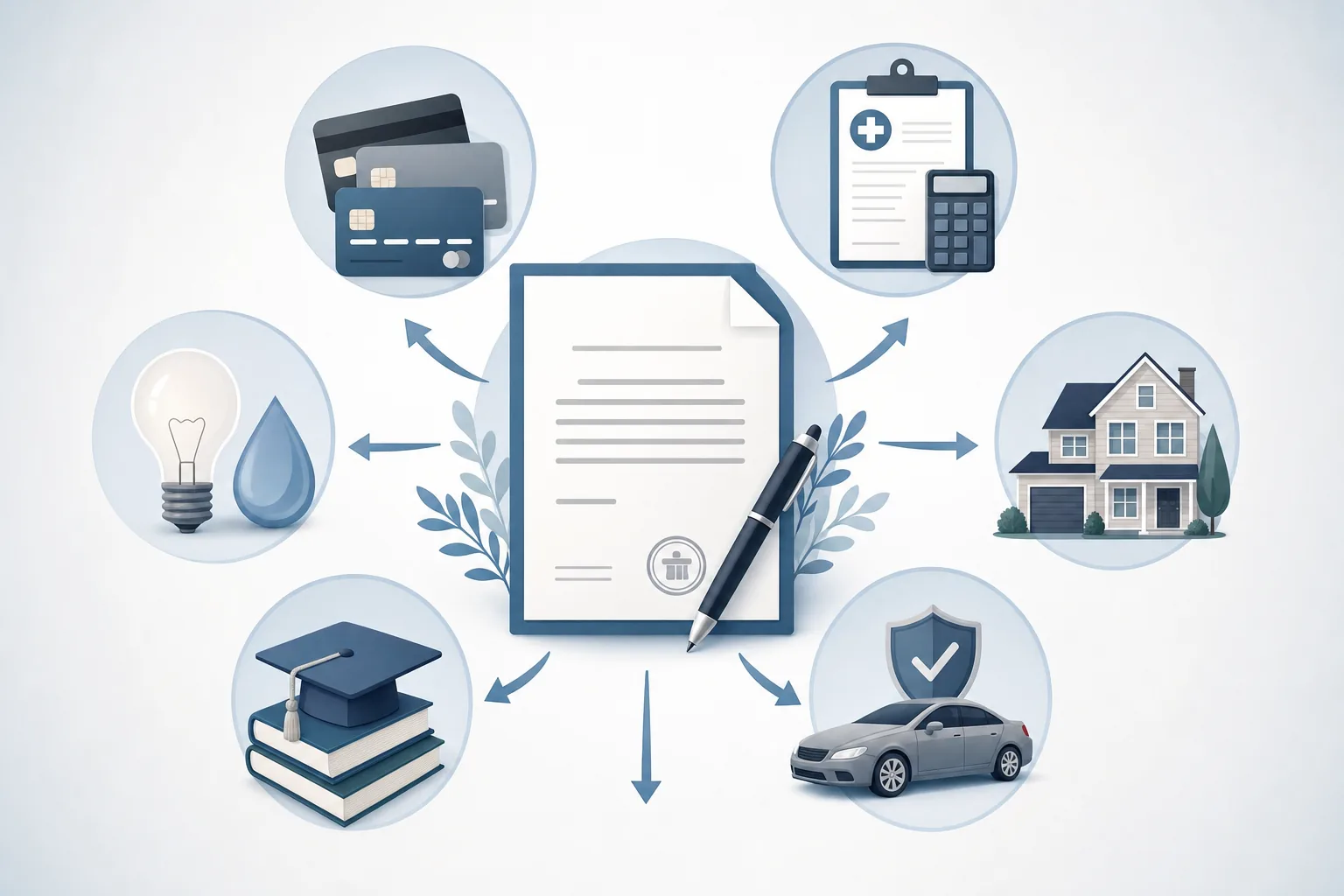
| Debt type | What happens at death |
|---|---|
| Credit cards | Estate obligation; balance forgiven if estate is insolvent |
| Medical bills | Estate obligation; filial laws may apply in certain states |
| Federal student loans | Discharged at death; family owes nothing |
| Private student loans | Varies by lender; some pursue the estate or a co-signer |
| Mortgages | Pass with the property |
| Auto loans | Pass with the vehicle |
Payment order matters too. Taxes and secured debts come first. Unsecured creditors collect from whatever remains. When the estate runs dry before everyone is paid, they absorb the shortfall. Heirs don't cover the gap.
Assets Protected From Creditors
Certain assets pass directly to beneficiaries without touching probate, putting them beyond creditors' reach entirely.

- Life insurance with a named beneficiary pays out directly to that person, never entering the estate.
- Retirement accounts (401(k)s and IRAs) with beneficiary designations work the same way.
- Assets held in a living trust pass outside the estate.
- Jointly owned property with rights of survivorship transfers automatically to the surviving owner.
The designation is what does the protecting. An IRA with no named beneficiary becomes estate property. The same account with one listed skips that process entirely. Whether those assets reach family often comes down to paperwork completed years earlier.
Dealing With Debt Collectors After a Death
Debt collectors can contact the estate, but they have limited rights when reaching out to family members. Under the Fair Debt Collection Practices Act (FDCPA), collectors may only contact relatives to locate the executor. They cannot pressure family members who have no legal obligation to pay.
If you are the executor, you can request that all communication go through you in writing. You are not required to pay debts from your own pocket.
What Happens When the Estate Cannot Pay All Debts
When an estate runs out of money before all debts are paid, creditors generally don't get to come after the heirs. Most debts simply go unpaid.
That said, the order in which debts get paid matters. States set priority rules, but the general sequence looks like this:
- Funeral and burial costs are typically paid first.
- Administrative costs and executor fees come next.
- Taxes owed to federal and state governments follow.
- Unsecured debts like credit cards and medical bills are last in line.
If the estate is insolvent, those at the bottom often receive nothing.
How Sunset Helps Families Handle Estate Settlement and Debt
When a parent or spouse dies and debts surface, families often don't know where to start. Sunset helps you get a clear picture of what they left behind, so you're not guessing.
Sunset searches for bank accounts, retirement funds, and other financial assets across 2,500+ institutions. Knowing what assets exist, and what they're worth, tells you whether the estate can actually cover outstanding debts before creditors come calling.
Sunset can help. You can get started at hellosunset.com.
Final Thoughts on Debt Responsibility After Someone Dies
The estate pays first, and heirs generally aren't liable unless they co-signed, inherited property with attached debt, or live in a state with specific spousal or filial rules. If you're dealing with debt after a parent or spouse dies, knowing what accounts and assets they had changes everything. You can search for them at no cost and get a full picture of what the estate can actually cover before creditors start calling.
FAQ
Can you inherit debt from your parents after death?
No, you cannot inherit debt from your parents the way you inherit property. When a parent dies, their debts belong to the estate and must be paid before heirs receive assets. If the estate has enough to cover the debts, you may inherit what remains. If not, creditors go unpaid and you generally walk away without personal liability, unless you co-signed a loan or live in a state with filial responsibility laws.
Can you inherit debt from your spouse in California?
Yes, California is a community property state where debts taken on during the marriage are treated as jointly owned, even if only one spouse's name is on the account. A surviving spouse may be responsible for these debts regardless of whether they co-signed. In common law states, a surviving spouse without a joint account or co-signature typically has no personal liability.
What happens to your debt when you die if you have no estate?
If there are no assets in the estate, most debts simply go unpaid. Creditors cannot pursue family members for the debt unless they co-signed, held a joint account, or fall under specific state rules like community property or filial responsibility laws. The estate is considered insolvent, and unsecured creditors like credit card companies absorb the loss.
How to protect yourself from your parents' debt?
Avoid co-signing loans or opening joint credit accounts with your parents. Understand whether they received care in a state with filial responsibility laws, which can require adult children to pay nursing home or medical bills if the parent was indigent. If you're named executor, you're responsible for paying debts from estate assets, but never from your own pocket unless you were legally obligated before the death.
Will I inherit my parents' debt if they have no assets?
No. If your parents have no assets, the estate is insolvent and creditors cannot collect from you personally. You are not responsible for paying debts from your own money unless you co-signed a loan, held a joint account, or live in a state where filial responsibility laws may apply to specific medical or nursing home debts.