When Is Probate Required? How to Know If an Estate Must Go Through Court (2026)
Learn when probate is required for estates, how state thresholds work, and when you can skip court. Complete guide with examples for 2026.
May 15, 2026

Your dad's house is in his name only, there's a bank account with no beneficiary listed, and you're staring at conflicting advice about when probate is required. Some states care about total estate value, others split the rules between real property and personal property, and almost everyone you've talked to has given you a different answer. The frustrating part is that probate rules aren't actually that complicated once you know what you're looking for. We're going to break down exactly when court is required, when it's not, and how to tell the difference in about ten minutes.
TLDR:
- Probate is required when assets are titled solely in the deceased's name with no beneficiary
- Small estate thresholds vary by state: CA $184,500, WI $50,000, OR $275,000 real property
- You can skip probate with POD/TOD designations, joint ownership, or living trusts
- A will does not bypass probate and dying without one makes the process harder
- Sunset determines if probate is needed and generates court-ready documents for all 50 states
What Is Probate and How Does It Work
Probate is the court-supervised process of settling a deceased person's estate, with 1.2 million probate cases annually across the United States. When someone dies with assets held solely in their name, those assets can't automatically pass to heirs.
Someone needs legal authority to act on behalf of the estate, and courts are how that authority gets granted.
The process follows a set sequence: the court verifies the will (if one exists), appoints an executor or personal representative, and oversees the rest. That executor inventories estate assets, notifies creditors, pays outstanding debts and taxes, and distributes what remains to beneficiaries. Timelines range from a few months for simple estates to 18 months or more when things get complicated.
When Probate Is Legally Required
Three circumstances most commonly make probate unavoidable.
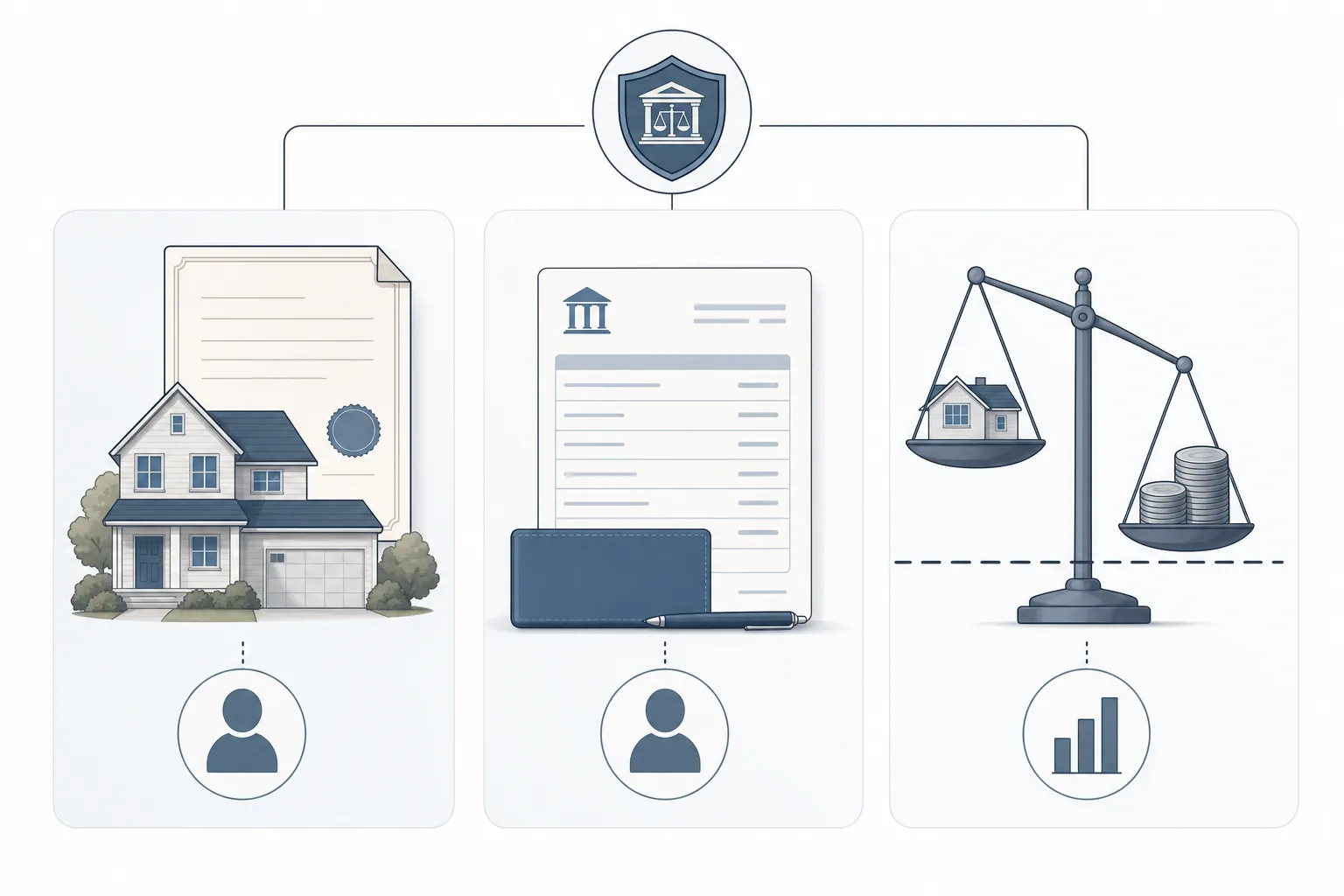
- Sole ownership: if an asset is titled only in the deceased's name with no joint owner and no beneficiary designation, a court order is generally the only way to transfer it legally. This covers bank accounts, investment accounts, and personal property.
- Real property: a home titled solely in the deceased's name cannot be sold or refinanced until title legally transfers, and probate is typically how that happens.
- Estate value above state thresholds: every state sets a dollar cutoff, and exceeding it generally triggers formal probate even when the estate looks straightforward.
If even one asset falls into these categories, the estate may need to go through court. How each asset is titled, and whether it carries a beneficiary designation, is usually the first thing worth checking.
When Probate Is Not Necessary After Death
Not every estate goes through court. With the right setup, heirs can skip it entirely.
Probate is generally not required when:
- Accounts carry a payable-on-death (POD) or transfer-on-death (TOD) designation, passing directly to the named beneficiary without court involvement
- Property is jointly held with right of survivorship, so the surviving owner inherits automatically
- Assets sit inside a living trust, which distributes to beneficiaries per the trust terms
- The estate falls below the state's small estate threshold, allowing a simplified affidavit instead of formal probate
How assets were titled before death determines probate eligibility more than almost anything else. A will alone does not bypass court. The account structure does.
State-Specific Probate Thresholds and Requirements
Probate thresholds vary widely by state. California requires probate for estates exceeding $184,500, while Wisconsin's threshold sits at $50,000. Virginia triggers probate based on asset type rather than a single dollar cutoff, and Oregon requires court involvement for estates over $275,000 in real property or $75,000 in personal property.
Here is a quick comparison across five commonly searched states:
| State | Probate threshold | Key notes |
|---|---|---|
| California | $184,500 | Adjusted periodically for inflation |
| Wisconsin | $50,000 | Simplified process available below threshold |
| Virginia | Varies by asset | Real vs. personal property rules differ |
| Georgia | No set minimum | Court decides based on circumstances |
| Oregon | $275,000 real / $75,000 personal | Among the higher thresholds nationally |
Small Estate Procedures and Affidavits
Many states let small estates skip formal probate through a simplified process. Instead of opening a court case, an heir signs a sworn affidavit stating their right to inherit, presents it to the bank or institution holding the assets, and collects them directly.
Thresholds vary widely by state. California allows affidavits for estates under $184,500, Wisconsin under $50,000, Virginia under $50,000, Oregon under $275,000, and Georgia under $10,000.
How Much an Estate Must Be Worth to Go Through Probate
The dollar figure that matters is not what an estate is worth overall. Most states measure only the gross value of probate assets: assets titled solely in the deceased's name with no beneficiary designation and no joint owner. A house worth $400,000 with a $350,000 mortgage still counts as $400,000 toward the threshold in most states, not $50,000.
What gets excluded is equally worth knowing. Accounts with POD or TOD designations, jointly held property, life insurance payable to a named beneficiary, and trust assets are all excluded regardless of their value.
The real question is: what did the deceased own outright, with no co-owner and no named beneficiary? That narrower number is what you compare against your state's threshold.
Probate vs. Non-Probate Assets
Whether an asset goes through probate has nothing to do with its type. It depends entirely on how it's titled and whether a beneficiary is named. The same bank account at the same bank can be a probate asset or not, depending entirely on its structure.
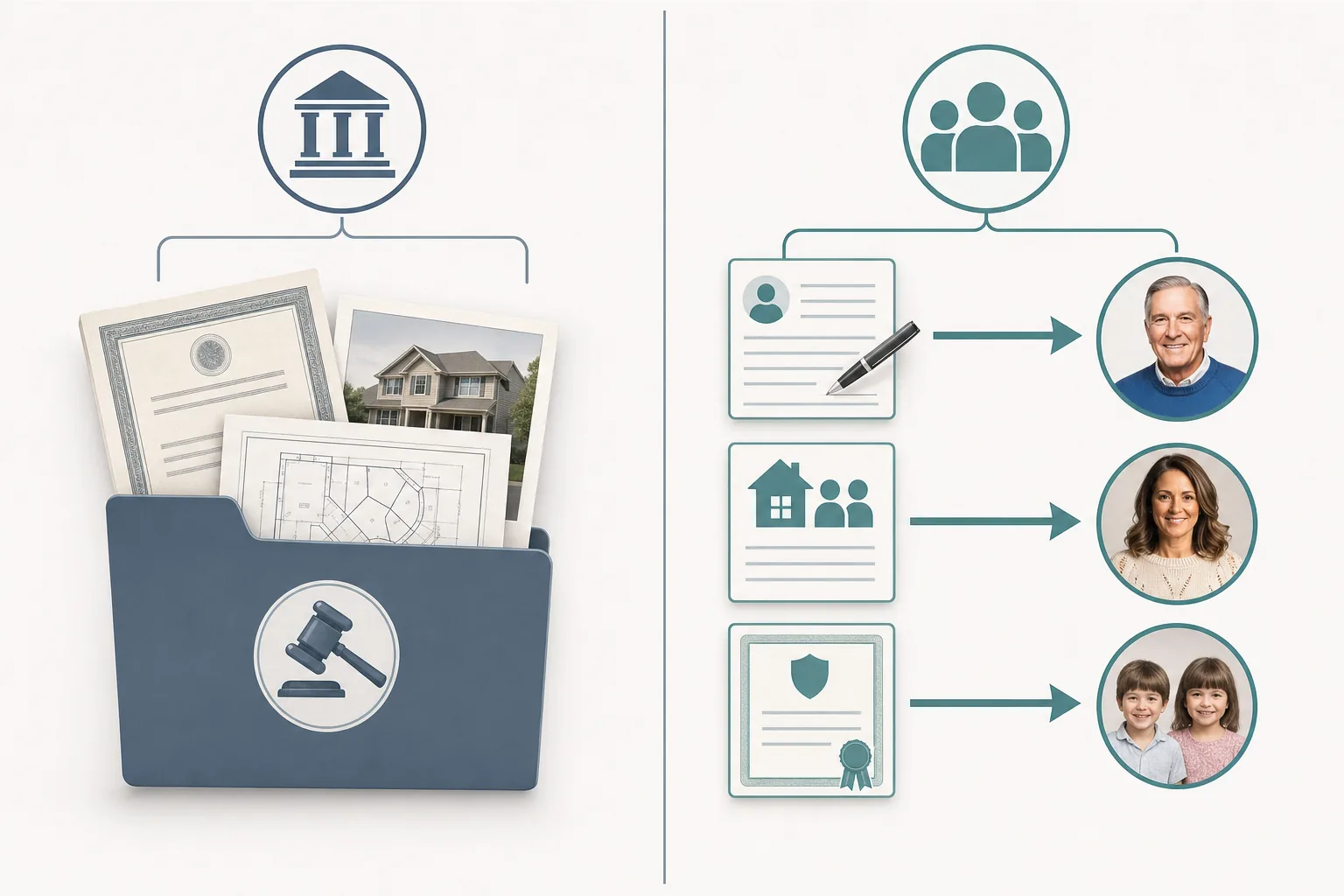
Probate assets include bank accounts with no beneficiary designation, real estate titled solely in the deceased's name, and life insurance payable to the estate. Non-probate assets include accounts with POD or TOD designations, jointly held property with right of survivorship, retirement accounts with named beneficiaries, and anything held in a trust.
What Happens If Probate Is Not Filed When Required
Skipping probate when it's legally required isn't a loophole. It creates real legal and financial problems for everyone involved.
Without a filed probate case, there's no court authority to transfer titled assets like real estate or vehicles. The estate stays frozen. Heirs can't sell the house, access bank accounts, or clear title to anything the deceased owned outright.
Courts can also impose penalties on executors who delay or avoid filing without cause. In some states, creditors retain the right to pursue estate assets indefinitely if probate is never opened.
How to Settle an Estate Without Probate
Settling an estate without probate comes down to how assets were structured before death:
- Living trusts: assets inside a revocable trust pass directly to beneficiaries per the trust terms, bypassing court entirely
- Beneficiary designations: adding POD or TOD designations to bank, retirement, and investment accounts is the fastest structural change most people can make
- Joint ownership with right of survivorship: the surviving owner inherits automatically, no court required
- Transfer-on-death deeds: available in most states, these let real property pass outside probate without needing a full trust
Advance planning is increasingly common, with trust and will ownership trends. If planning wasn't done beforehand, check whether the estate falls below your state's small estate threshold.
A signed affidavit may be all that's needed.
Probate Costs and Timelines by State
Probate costs and timelines vary widely depending on where the estate is located. The table below covers the five states included in this guide.
| State | Typical duration | Estimated cost |
|---|---|---|
| California | 9 months to 2+ years | 4% to 8% of estate value |
| Wisconsin | 6 to 18 months | 2% to 5% of estate value |
| Virginia | 6 to 12 months | 3% to 6% of estate value |
| Georgia | 6 to 12 months | 3% to 6% of estate value |
| Oregon | 6 to 18 months | 3% to 6% of estate value |
These ranges reflect attorney fees, court filing fees, and executor compensation. Contested estates, missing documents, or complex asset structures can push both timelines and costs well beyond these estimates.
Is Probate Necessary If There Is a Will (or No Will)
A will does not bypass probate. It directs it. The will gets submitted to a court, verified, and then followed. Without that court process, nobody has legal authority to carry out its instructions.
Dying without a will (intestate) doesn't avoid probate either, and often makes things harder. State intestacy laws determine who inherits, which may not reflect what the deceased wanted, and disputes among heirs become more common without written instructions to reference.
The real probate bypass has nothing to do with wills. It comes from account structure: beneficiary designations, joint ownership, trusts.
How Sunset Helps Families Handle Probate Requirements
Knowing whether probate is required starts with knowing what the estate actually contains. Sunset searches across bank accounts, retirement accounts, real estate, vehicles, and more, so you're not guessing at whether an estate clears your state's threshold.
Sunset's probate tools cover 2,500+ financial institutions across all 50 states and 3,000+ counties, generating the specific forms needed for full probate, small estate affidavits, or spousal property petitions. If probate turns out not to be required, the same tools handle account closures.
Most families find 100% of assets within a week. The service is free. You can start at hellosunset.com.
Final Thoughts on Navigating Probate Thresholds and Requirements
Figuring out when probate is required starts with knowing what assets exist and how they were owned.
Sunset searches across financial institutions, property records, and vehicle registrations in every state, then shows you exactly which assets need court involvement based on local thresholds and ownership structure. The search covers 2,500+ banks, all 50 states, and 3,000+ counties. Start finding accounts free and get the full picture in about a week.
FAQ
When is probate required for a house?
Probate is required for a house when the property is titled solely in the deceased's name with no joint owner, no transfer-on-death deed, and not held in a trust. The house cannot be sold or refinanced until title legally transfers through court, regardless of whether there's a mortgage on the property.
How much does an estate have to be worth to go to probate?
The value that triggers probate varies by state and only counts probate assets—property titled solely in the deceased's name with no beneficiary designation. California requires probate for estates exceeding $184,500, Wisconsin at $50,000, and Oregon at $275,000 for real property or $75,000 for personal property. Joint accounts, beneficiary-designated accounts, and trust assets don't count toward these thresholds.
Can I settle an estate without probate if there's a will?
A will doesn't bypass probate—it directs it. The court verifies the will and grants authority to the executor, who then follows its instructions. You can avoid probate only if assets were structured correctly before death through beneficiary designations, joint ownership with right of survivorship, or a living trust.
What happens if you don't file probate in California when it's required?
The estate stays frozen. Heirs cannot sell real estate, access solely-owned bank accounts, or clear title to any property the deceased owned outright. Courts can impose penalties on executors who delay or avoid filing without cause, and creditors may retain the right to pursue estate assets indefinitely if probate is never opened.
How to settle an estate without probate in Wisconsin?
If the estate is under $50,000, Wisconsin allows a simplified small estate affidavit instead of formal probate. For larger estates, advance planning is the only path: assets must carry payable-on-death designations, be held jointly with right of survivorship, or sit inside a living trust to bypass court entirely.