What Happens to Mail After Someone Dies and How to Handle It (2026)
Learn what happens to mail after someone dies and how to handle it in 2026. Forward deceased mail through USPS, stop junk mail, and contact senders directly.
May 13, 2026

Your dad passed away 3 weeks ago and you're still getting his Citibank statements, Verizon bills, and a furniture catalog he never asked for, because dealing with deceased mail means contacting every sender one by one. Forwarding through USPS helps with some of it, but it requires documents you probably don't have yet, and it won't stop financial mail marked "do not forward" or junk mailers who don't know he died. This is how you actually get control over the mailbox, from marking envelopes "deceased return to sender" to using the DDNC list and calling institutions directly.
TLDR:
- You need legal authority (letters testamentary or administration) to forward deceased mail through USPS
- Register on the Deceased Do Not Contact list at dmachoice.org ($6) to stop marketing mail in 3 months
- Write "Deceased, Return to Sender" on unopened mail and cross out barcodes as a temporary measure
- Contact all three credit bureaus to place a deceased indicator and prevent identity theft
- Sunset searches 2,500+ financial institutions to find accounts that mail may be signaling
Understanding Legal Authority to Manage Deceased Mail
Not every family member can walk into a post office and start redirecting someone's mail. USPS requires whoever manages a deceased person's mail to hold legal authority, which typically means presenting letters testamentary or letters of administration issued by a probate court.
Those documents officially name you as executor or administrator of the estate. Without them, the post office cannot verify you have any right to intercept someone else's correspondence, regardless of your relationship to the deceased.
The timing gap is where things get complicated. Getting letters testamentary can take weeks, sometimes longer depending on the state and how busy the probate court is. Mail keeps arriving at the old location the entire time, with no one legally in a position to act on it. Knowing this gap exists is the first step toward managing it.
How to Forward Mail for a Deceased Person Through USPS
Once you have your legal authority documents in hand, you'll need to visit your local post office in person. USPS has no online option for deceased mail forwarding, so there's no way around this step.
Bring the following:
- Government-issued photo ID
- A certified copy of the death certificate
- Letters testamentary or letters of administration
- The deceased's last known location
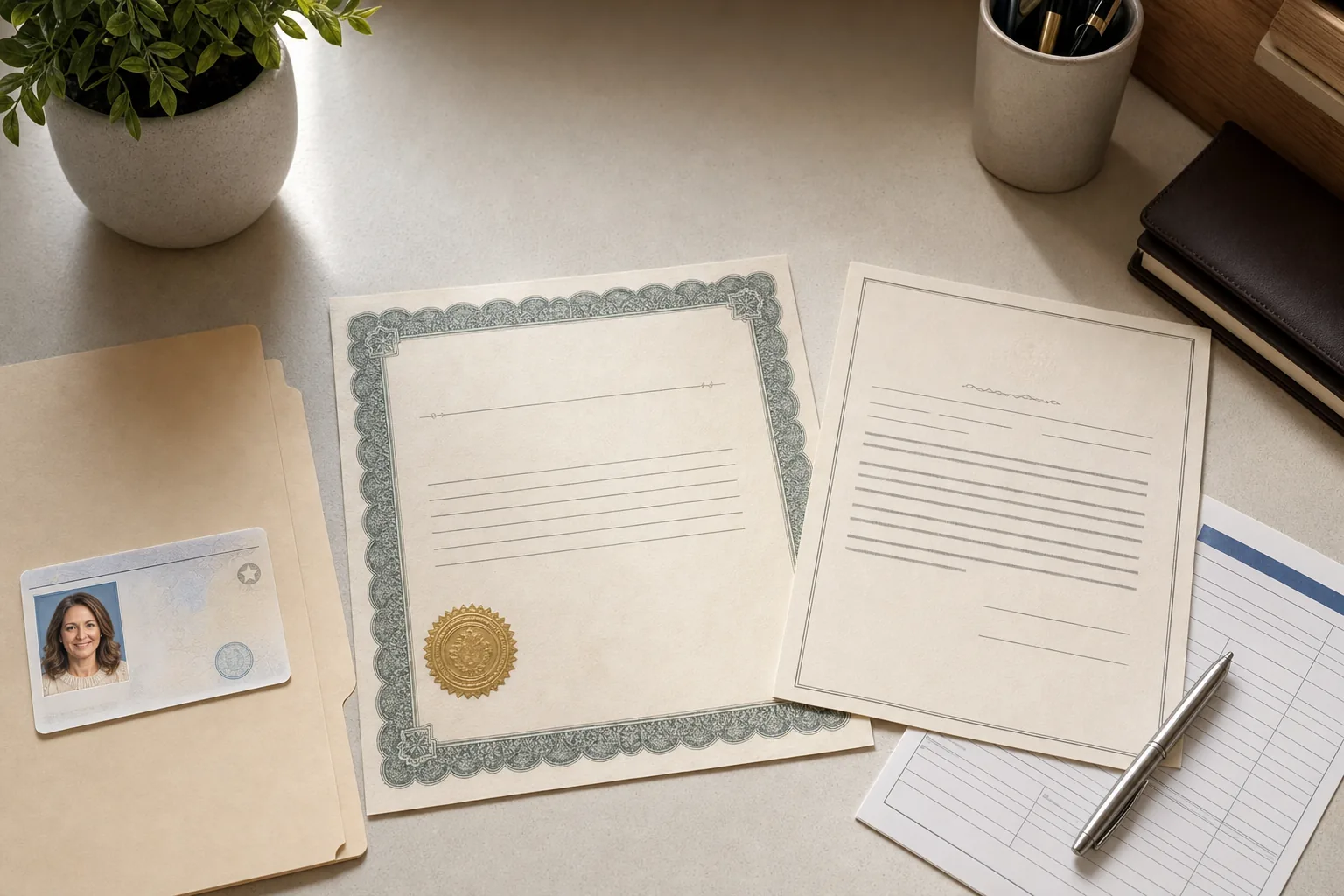
At the counter, complete PS Form 3575 and designate a forwarding location, usually your own or the estate's. USPS typically begins forwarding within three business days, but allow up to two weeks before expecting consistent results.
One thing worth knowing before you go: financial institutions often mark statements "do not forward" at the sender level. Some financial mail will still be returned to sender regardless of any forwarding order you set up.
Stopping Junk Mail with the Deceased Do Not Contact List
The Deceased Do Not Contact (DDNC) list, managed by DMAchoice, is how you reduce the marketing mail that keeps piling up after a death. Registration costs $6 at dmachoice.org and requires the deceased's full name, address, and date of death. The process takes about 10 minutes.
DMAchoice is run by the Data & Marketing Association and is a legitimate service. Once registered, member companies receive notice to remove the deceased from their mailing lists, catalogs, and promotional sends.
Set realistic expectations going in: it typically takes about three months before volume noticeably drops. Catalogs are often printed months in advance, and each company handles removals on its own schedule.
One important limitation: the DDNC list only covers commercial marketing mail. Bills, legal notices, government correspondence, and financial institution mail won't stop.
Marking Mail as Deceased Return to Sender
While waiting on legal documents or a forwarding order to take effect, writing "Deceased, Return to Sender" on unopened mail is a valid workaround. No legal authority is required. It signals to the sender that the recipient is no longer at that address, and most will update their records.
One detail worth knowing: cross out any barcodes printed on the envelope before dropping it back in a mailbox. Postal sorting machines read those barcodes automatically and can re-route the piece right back to the same address.
This is a short-term measure, not a permanent fix. Persistent mail from financial institutions or creditors won't stop without direct contact. But while you're getting legal documents in order, it's a simple and immediate option.
| Method | Legal Authority Required | Time to Take Effect | What It Stops | What It Doesn't Stop | Cost |
|---|---|---|---|---|---|
| USPS Mail Forwarding (PS Form 3575) | Yes - letters testamentary or administration required | 3 business days to 2 weeks | Most first-class mail, magazines, packages sent to the deceased's address | Mail marked "do not forward" by sender, most financial institution statements, legal notices | Free |
| Deceased Do Not Contact List (DMAchoice) | No | 3 months average | Marketing mail, catalogs, promotional sends from member companies | Bills, legal notices, government mail, financial institution correspondence, non-member company mailings | $6 |
| Marking "Deceased, Return to Sender" | No | Varies by sender - some update immediately, others take weeks or never update | Mail from senders who actively process returns and update their records | Automated mailings, pre-printed campaigns, senders who don't monitor returns | Free |
| Direct Contact with Senders | No, but certified death certificate required by most institutions | Immediate once processed, but processing time varies by institution | All mail from that specific sender once account is closed or updated | Nothing - this is the only permanent solution for each sender | Free (death certificate copies may have a fee) |
| Credit Bureau Deceased Indicator | No, but death certificate required | Immediate for credit file, but doesn't affect existing sender relationships | New credit applications and fraud attempts in the deceased's name | Existing account mail, marketing from current relationships, non-credit-related correspondence | Free |
Protecting Against Identity Theft After Death
Identity theft doesn't pause for grief. The same mail you're managing may include financial documents that need protection. A 2018 study found that roughly 800,000 of the 2.5 million annual identity theft victims in the U.S. were deceased persons. The gap between death and formal notification of institutions is exactly when fraudsters act, because the deceased's credit file stays open until someone closes it.

Start by contacting all three credit bureaus (Equifax, Experian, and TransUnion) to place a deceased indicator on the credit file. This blocks new credit from being opened in the deceased's name. According to Carolina Law, 85% of all credit bureau disputes are referred to original data furnishers, and credit files marked as deceased are deleted after seven years to help reduce fraud.
Notify the Social Security Administration as well so the death is recorded in their system and can propagate to lenders who pull reports.
One often-overlooked risk: the obituary. Publishing a full birth date, home address, or maiden name hands fraudsters the basic information they need to act.
Contacting Senders Directly to Update Records
Forwarding redirects mail but never updates the sender's records. A financial institution that still has a deceased person listed as an active accountholder will keep generating statements no matter where the mail goes.
Direct contact is what stops the source. Prioritize in this order:
- Financial institutions: banks, retirement custodians, brokerage firms, and life insurance search providers, since these generate the most persistent mail and require formal notification to close or transfer accounts.
- Government agencies: the Social Security Administration, IRS, and any pension administrators that may still have the deceased listed as an active recipient. You may also need to conduct an investment account search for brokerage holdings.
- Subscription services: streaming, magazines, and recurring billing accounts that will keep charging and mailing until someone cancels them directly.
- Utilities and local services: electric, gas, internet, and phone providers tied to the deceased's residence.
For each outreach, have a certified death certificate ready. Most institutions won't make changes to account records without one.
Common Challenges When Managing Deceased Mail
After a death, mail doesn't stop on its own, and the volume can be overwhelming. Several issues tend to surface repeatedly for families handling an estate.
Junk mail keeps coming for months
Marketing mailers, catalogs, and credit card offers can arrive for a year or more after someone dies. Senders don't know, and some lists get sold repeatedly. The Deceased Do Not Contact (DDNC) list through DMAchoice is one of the few ways to cut this off at the source.
Mail arrives for properties you're still managing
If the deceased owned rental property or a second home, mail may be going to an address nobody is monitoring. The same applies to retirement account search statements that could arrive at any property address. Forwarding or redirecting that mail requires its own setup through USPS.
You're not sure what's important
Bills, account statements, legal notices, and refund checks can all look like junk at first glance. Finding all assets of a deceased person requires careful review of this mail. Going through everything carefully matters, especially in the first few months.
Estate Settlement Tools That Handle More Than Mail
Mail forwarding and the DDNC list solve surface problems. The deeper issue is that mail often signals accounts that still need to be found, closed, or transferred. An unfamiliar statement arriving months after a death is usually a clue about finding your deceased parent's assets, not just clutter.
and offers bank account search across 2,500+ financial institutions to find bank accounts, retirement accounts, investments, and life insurance policies. It also generates probate documents for all 50 states and 3,000+ counties, and walks through closing each account through a guided workflow that connects you to estate teams directly. See how it works for the full process.
If you're sorting through a deceased person's mail and realizing you don't recognize half the senders, that's where starting a search makes sense.
Final Thoughts on Redirecting a Deceased Person's Mail
Once you set up mail forwarding for a deceased person, most of the volume will redirect within a couple weeks. But forwarding doesn't update sender records, and it doesn't tell you what accounts exist that aren't generating mail yet. Running a full asset search helps close that gap. Sunset searches every bank, credit union, and retirement account custodian in the country and tells you what it finds and what it doesn't. You can start a free search here.
FAQ
How do I stop mail for a deceased person?
You'll need to visit your local post office in person with a government-issued photo ID, a certified death certificate, and letters testamentary or letters of administration. Complete PS Form 3575 at the counter to set up mail forwarding, which typically begins within three business days. USPS has no online option for deceased mail forwarding.
Can I write deceased return to sender on mail USPS?
Yes. Writing "Deceased, Return to Sender" on unopened mail requires no legal authority and is a valid short-term option while waiting on probate documents or forwarding orders. Cross out any barcodes on the envelope before dropping it back in a mailbox to prevent postal sorting machines from re-routing it to the same address.
Is DMAchoice legit for stopping deceased mail?
Yes. DMAchoice runs the Deceased Do Not Contact (DDNC) list through the Data & Marketing Association and costs $6 to register. It reduces marketing mail, catalogs, and promotional sends from member companies. Expect about three months before volume drops noticeably, and know that it only covers commercial marketing mail, not bills, legal notices, or financial institution correspondence.
Forwarding mail for a deceased person vs contacting senders directly?
Forwarding redirects mail to a new address but never updates the sender's records, so financial institutions will keep generating statements for the deceased. Direct contact stops the source and is required for closing or transferring accounts. Prioritize financial institutions, government agencies, and subscription services that need formal notification with a certified death certificate.
How to stop junk mail for a deceased person?
Register on the Deceased Do Not Contact (DDNC) list at dmachoice.org for $6, which notifies member companies to remove the deceased from mailing lists. Allow three months for volume to drop. For persistent mail from specific senders, contact them directly with a death certificate. Some mail will arrive for months regardless because lists get sold and catalogs print far in advance.