Life Insurance Beneficiary Rules: What Families Need to Know After a Death (2026)
Learn life insurance beneficiary rules families need to know after a death. Who gets paid, what locks designations, and why updating forms matters.
May 18, 2026

When someone dies, life insurance beneficiary rules decide who gets paid and how fast the money moves. But most families don't realize the form filled out years ago still controls the payout, even if it names an ex-spouse or someone who died first. No will or verbal agreement changes it after the fact.
According to insurance industry data, 8% of life insurance claims face disputes over outdated beneficiary designations.
TLDR:
- Beneficiary designations lock at death and override wills entirely: life insurance pays whoever is named on file.
- Irrevocable designations require written consent to change; revocable ones can be updated anytime before death.
- Per stirpes passes a deceased beneficiary's share to their children; per capita splits only among survivors.
- Naming minors without custodians or listing vague identifiers like "my spouse" delays payouts by months.
- Sunset locates unknown life insurance policies in 1-2 days and walks families through filing claims.
Understanding Primary and Contingent Beneficiaries
A primary beneficiary is the first person in line to receive the payout when a policyholder dies. If they're alive, willing, and reachable, the money goes directly to them and skips probate entirely.
A contingent beneficiary is the backup. They step in only if the primary is deceased, declines, or can't be located. Without a contingent named, most insurers will pay the proceeds into the estate instead, pulling the money into probate and delaying distribution by months.
Revocable vs. Irrevocable Beneficiary Designations
Most life insurance policies use revocable beneficiary designations by default, meaning the policyholder can update, swap, or remove a named beneficiary at any time without consent or notice. After a divorce or remarriage, this flexibility is exactly what most people need.

Irrevocable designations work differently. Once named, an irrevocable beneficiary holds a legal interest in the policy. The policyholder cannot change the designation, take out a loan, or surrender the policy without that person's written consent. Courts often require this arrangement in divorce settlements to protect child support or alimony obligations. If someone tries to bypass it, the insurer will refuse the change and the original designation stands.
| Designation Type | Can Be Changed | Common Use Cases | What Happens at Death |
|---|---|---|---|
| Primary Beneficiary (Revocable) | Yes, anytime before death without consent | Naming spouse, children, or other family members with flexibility to update after life changes | Receives full payout directly, skips probate entirely |
| Primary Beneficiary (Irrevocable) | No, requires written consent from beneficiary to change | Divorce settlements, child support protection, alimony obligations, business partnerships | Receives full payout directly with legal protection that cannot be overridden |
| Contingent Beneficiary | Yes, if revocable; no if irrevocable | Backup in case primary dies first or cannot be located | Receives payout only if primary is deceased, declines, or unreachable |
| Per Stirpes Distribution | Set at designation, changed same as beneficiary type | When you want a deceased beneficiary's share to pass to their children | Deceased beneficiary's portion goes to their descendants automatically |
| Per Capita Distribution | Set at designation, changed same as beneficiary type | Default on most forms; splits only among living named beneficiaries | Deceased beneficiary's share is redistributed among survivors only, descendants get nothing |
| No Named Beneficiary | N/A | Oversight or outdated policy where beneficiaries died and were never updated | Proceeds flow into estate, go through probate, exposed to creditor claims and delays |
Community Property State Rules for Spouses
In nine community property states, including California, Texas, Arizona, and Nevada, spouses may have automatic legal claims to life insurance proceeds even when they aren't named as beneficiaries. Courts in these states have ruled that premiums paid with marital funds create shared ownership interests in the policy itself.
This doesn't override every named beneficiary designation, but it does create grounds for a spouse to contest a payout in probate court, particularly when the policy was purchased during the marriage.
What Happens When a Beneficiary Dies Before the Policyholder
When a primary beneficiary predeceases the policyholder and no contingent is named, proceeds flow into the estate. Predictable, but rarely what anyone intended. The subtler problem arises when multiple beneficiaries are listed and one dies first.
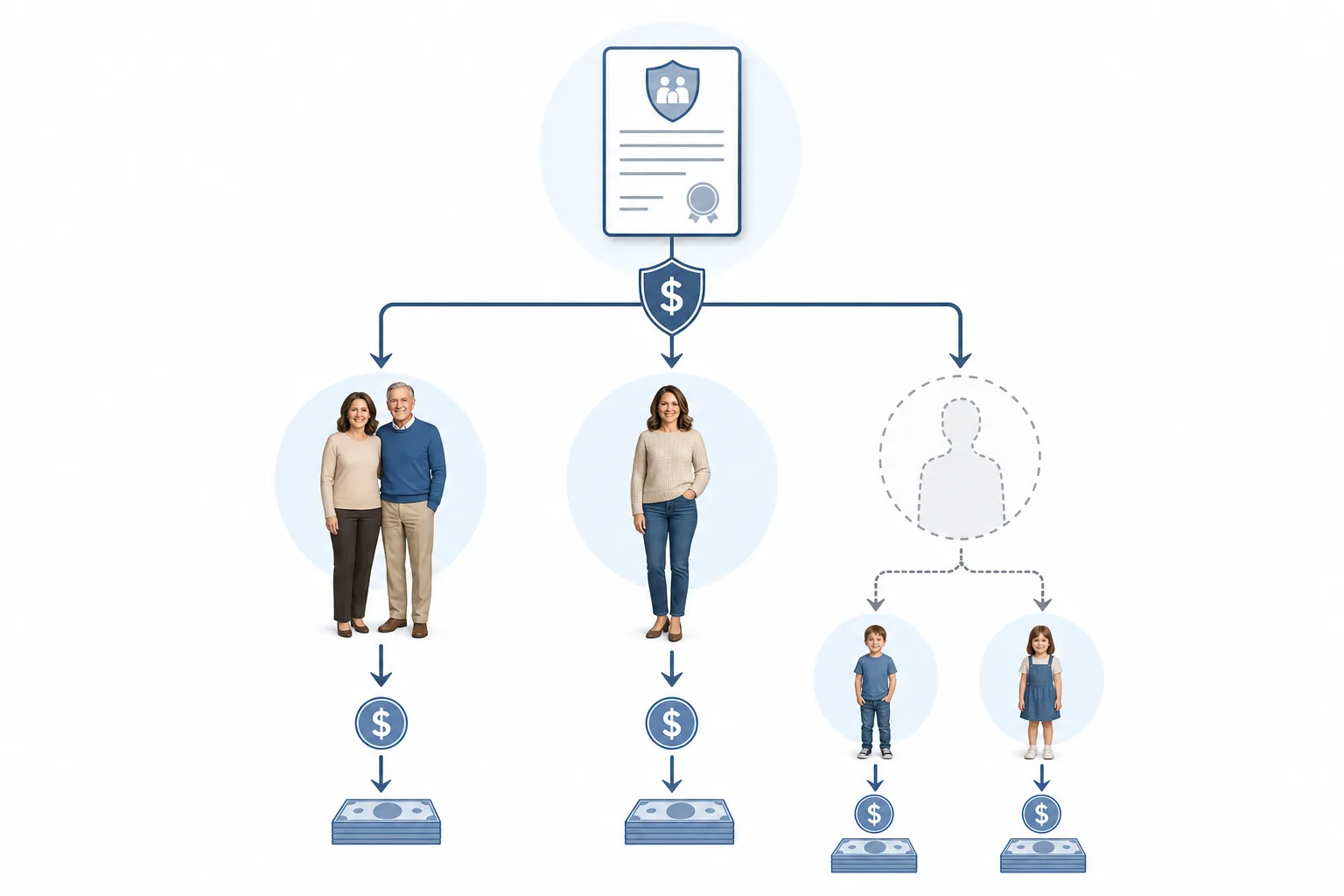
Two distribution rules govern this outcome: per stirpes and per capita. Per stirpes passes a deceased beneficiary's share down to their children. Per capita splits the payout only among surviving named beneficiaries, cutting out any descendants of the deceased one entirely.
Most people never consciously chose between these. A form completed decades ago likely defaults to per capita, which can quietly disinherit grandchildren the policyholder fully expected to be covered.
Can a Life Insurance Beneficiary Be Changed After Death
No. Once a policyholder dies, the beneficiary designation is locked. Whatever form was on file at the insurer on the day of death controls the payout. No will, family agreement, or court order filed after the fact can change it.
This catches families off guard, especially when a will says something different. Life insurance with a named beneficiary is not probate property, so the insurer pays that person directly and ignores the will entirely. If the policy names one child but the will splits everything among three, the insurer pays the one child. The other two have no claim against the insurer, only potentially against that beneficiary directly, which is a much harder fight.
Common Beneficiary Designation Mistakes That Cause Disputes
The mistakes below look minor on paper. They're not.
- Vague identification: writing "my spouse" or "my children" instead of legal names forces insurers to verify identity before releasing funds, sometimes triggering a full legal review.
- Percentage errors: beneficiary shares must total exactly 100%. Three people listed at 40/40/40 creates an ambiguity the insurer won't resolve on its own.
- Outdated designations: a form naming an ex-spouse or a deceased parent still controls the payout. Insurers pay whoever is on file, regardless of what changed since.
- Naming a minor without a custodian: insurers cannot legally pay a child directly. Without a named guardian or UTMA custodian, a court must appoint one first, adding months and legal fees before any money moves.
Life Insurance Beneficiary Rules After Divorce
Divorce creates one of the most common life insurance disputes families face. In most states, removing an ex-spouse as beneficiary requires a formal change of beneficiary form filed with the insurer before death. Forgetting this step means your ex could still collect.
A few states automatically revoke a former spouse's beneficiary status upon divorce, but federal law often overrides this for employer-sponsored policies governed by ERISA. In those cases, the named beneficiary on file typically wins, regardless of divorce decrees or state law.
How to Find Out If You Are a Beneficiary
Many families never know they're named as a beneficiary until they think to ask. In fact, only 39% of Baby Boomers feel prepared for their roles as life insurance beneficiaries, dropping to just 22% among Gen Z.
Here's how to find out:
- Contact the insurance company directly if you know who the policyholder used. Bring a copy of the death certificate and your own ID.
- Search the deceased's records for policy documents, premium payment receipts, or correspondence from an insurer.
- Check with their employer or former employers, since group life insurance through work is easy to overlook.
- Use your state's unclaimed property database, where unpaid life insurance benefits often end up after years of inactivity.
Contesting a Beneficiary Designation
Challenging a designation requires legal grounds: undue influence, lack of mental capacity at the time of signing, fraud, or coercion. Disagreeing with the outcome is not a legal claim.
There are a few situations where a contest has merit:
- The policyholder was manipulated into naming someone shortly before death, particularly by a caregiver or new partner with access and influence.
- The policyholder lacked mental capacity when the change was made, which medical records may help prove.
- The designation was the result of forgery or fraudulent documentation.
Insurers won't resolve these disputes themselves. When a challenge is filed, they typically deposit the funds with the court and step aside. The family then litigates, often for months.
Life Insurance Payout Options and Timelines
When a claim is approved, most insurers offer several ways to receive the funds.
- Lump sum: the full benefit paid at once, which is the most common choice and keeps things simple for the beneficiary.
- Installments: payments spread over a set period, sometimes used when a beneficiary prefers steady income over a windfall.
- Retained asset account: the insurer holds the funds in an interest-bearing account that the beneficiary can draw from.
Most claims are paid within 30 to 60 days of submitting a completed claim with a certified death certificate. Contested claims or those involving unclear beneficiary designations can take considerably longer.
When Life Insurance Proceeds Go to the Estate
When no living beneficiary exists, life insurance proceeds flow into the estate and get treated like any other asset the deceased owned outright, losing their probate-exempt status entirely.
Once funds enter the estate, creditors can make claims against them. Medical bills, outstanding loans, and credit card balances all get paid before heirs see anything. A policy intended to protect a family can end up servicing debt instead.
Estate tax exposure is another consequence many families don't anticipate. Proceeds included in a taxable estate may push the total value above federal or state exemption thresholds, creating a tax bill payable before distribution.
How Sunset Helps Families Locate and Claim Life Insurance After a Death
Finding a life insurance policy you didn't know existed is harder than it sounds. Most families search paper files and old emails and still miss policies held through a former employer or a government program the deceased never mentioned.
Sunset searches thousands of carriers and programs, returning results in one to two business days for most policies. If no policy exists, we tell you that too. That negative result matters: it's the difference between wondering for years and actually knowing.
Once a policy is found, Sunset walks you through the processr family.
Final Thoughts on Managing Life Insurance After a Death
Families dealing with life insurance beneficiary payout questions face a system that's both strict and unforgiving, where a form filed years ago controls everything regardless of what's changed since. If you're the policyholder, reviewing your beneficiaries now saves your family from disputes later. If you're searching for a policy after someone's death and you're not sure where to start, sign up free and we'll search across thousands of carriers to find what existsr family. The key is knowing the rules before they matter, not scrambling to learn them when the claim is already filed.
FAQ
Can a life insurance beneficiary be changed after death?
No, beneficiary designations are locked once the policyholder dies. Whatever form was on file at the insurer on the date of death controls the payout, regardless of what a will says or what family members agree to later.
Is your spouse automatically your beneficiary on life insurance?
Not always. Most policies require you to name your spouse explicitly as beneficiary. However, in nine community property states including California, Texas, and Arizona, spouses may have legal claims to proceeds even when not named, especially if marital funds paid the premiums.
Life insurance beneficiary rules spouse after death vs divorce?
After death, the named beneficiary receives the payout immediately unless the designation is contested. After divorce, most states require you to file a formal change of beneficiary form to remove an ex-spouse, or they still collect. Federal ERISA policies often override state laws that automatically revoke ex-spouses, so the named beneficiary wins.
What happens if the sole beneficiary of a life insurance policy dies before the insured?
The proceeds typically flow into the policyholder's estate and go through probate, which delays distribution by months and exposes the funds to creditor claims. If you named a contingent beneficiary, they would receive the payout directly and skip probate entirely.
How to find out who is the beneficiary of a life insurance policy?
Contact the insurance company directly with a death certificate and your ID, search the deceased's records for policy documents or premium receipts, check with current and former employers for group coverage, or use your state's unclaimed property database where unpaid benefits eventually land.